Fishing in July
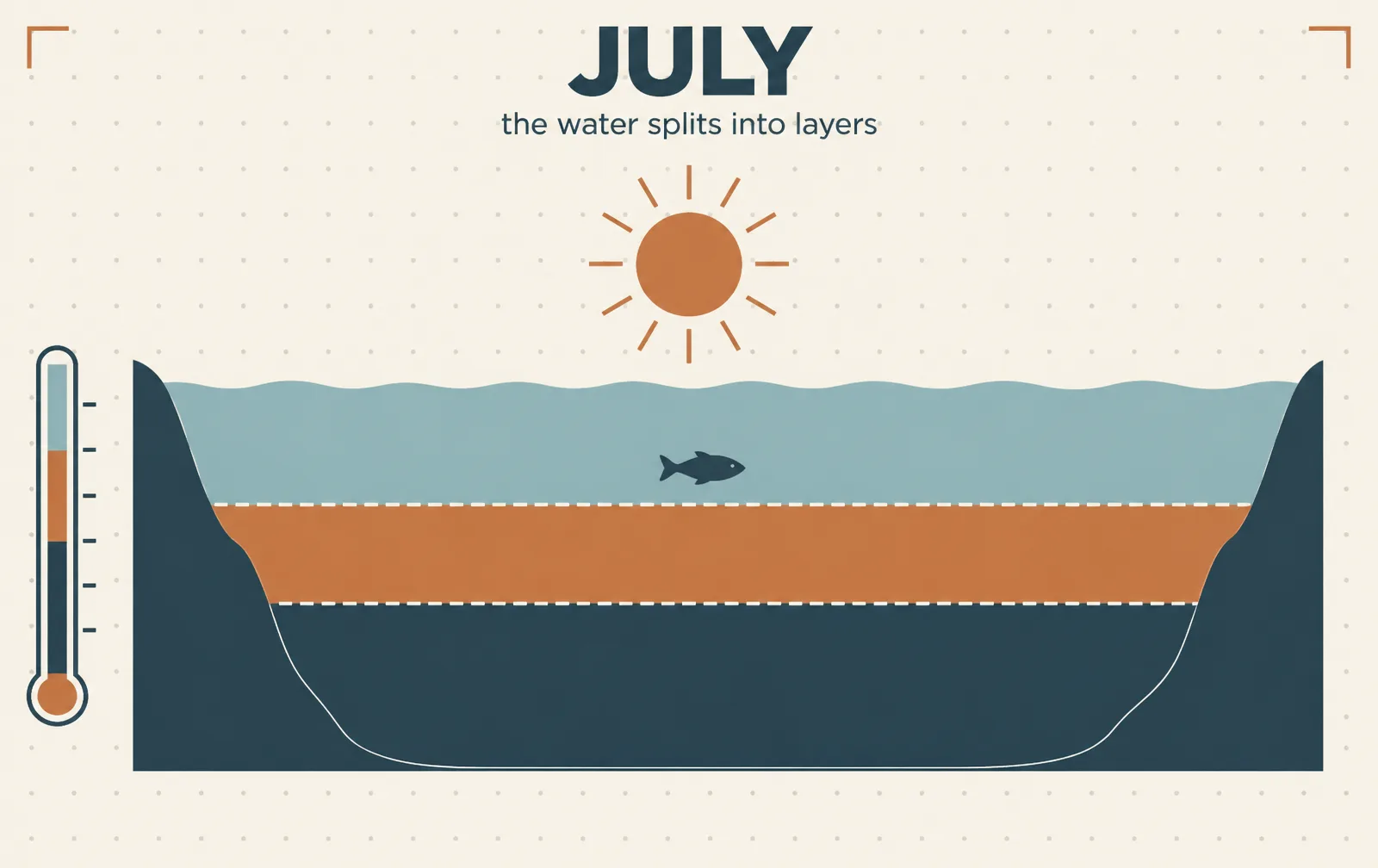
July often holds the highest surface temperatures of the year. In deep, still water that creates layers - warm above, cold below, with an oxygen-poor band in between that fish will not cross. Either fish come up for the night or they sit just above the cold layer through the day, feeding little.
Last reviewed 26 September 2026 · Editorial policy
What the water is doing
Heat is the whole story. Where water is shallow or moving, oxygen stays high and fish feed. Where a lake has stratified, the fish are packed into a band of water you cannot see, and the depth you fish matters more than anything else about your presentation.
On the bank, look for
- Look for oxygen. Moving water, wind-blown banks, inlets and shallow, weed-churned shallows hold fish when flat, hot water does not.
- At night, fish come up. A margin you would not look at at noon can be a foot deep and full of feeding fish at ten o'clock.
- Check the water at the surface and at depth if you can. A thermometer in July tells you which layer the fish are in, and therefore where your bait should sit.
What to change this month
Fish the edges of the day and the night
Sessions that start at five and finish by nine, or begin after the sun is down, catch more fish than a full day on the bank in July.
Go deeper and slower
Through the day, work the band of water just above the cold layer, slowly. A fast retrieve in hot water mostly catches nothing.
Keep fish alive and cool
Warm water holds less oxygen and a fish landed in July is under real stress. Keep it in the water, in a shaded, moving spot, and release rather than keep.
Fish worth chasing in july


Photos from Wikimedia Commons under free licences - credits on each species page.
Techniques that suit this month
Conditions that decide the day
Where this shows up
Guides worth reading first
Watch out for
- Algae blooms, low water and warm temperatures together can make a stillwater nearly unfishable, and a fish in it is easily killed by being played too long.
- Hot days dry the banks and abrade line against bank-side debris. Check your leader often.
- Sand and shingle get hot enough to damage footwear and skin. Take care on a surf or a jetty at midday.
Questions about fishing in july
Is July a bad month for fishing?
It is the hardest month in many places, but only if you fish the middle of the day. Night fishing and dawn sessions in July are often the best of the year, because fish feed freely once the water cools.
What is the thermocline and why does it matter?
In deep water in summer, warm water sits on top of cold with a sharp transition between them. Below the cold layer there is often too little oxygen for fish. Your bait has to sit in the band fish are actually occupying.
Should I keep fish in July?
Best avoided. A fish landed in warm, low-oxygen water is already stressed, and keeping it in a bag in the same water often kills it. Photograph it and let it go.