Tackle by species
Start with the fish. Its size, habitat and feeding behaviour set your line strength, rod power and hook size — everything else follows from that.
Line and rod at a glance
| Species | Water | Typical weight | Main line | Rod power |
|---|---|---|---|---|
| Largemouth Bass | Freshwater | 1–6 lb | 10–20 lb | Medium to Medium-Heavy, fast action |
| Smallmouth Bass | Freshwater | 1–4 lb | 6–12 lb | Medium-Light to Medium, fast action |
| Rainbow Trout | Freshwater | 0.5–4 lb | 4–8 lb | Light to Ultralight, moderate action |
| Brown Trout | Freshwater | 0.5–5 lb | 4–10 lb | Light, moderate action |
| Northern Pike | Freshwater | 3–20 lb | 30–65 lb | Heavy, fast action |
| Walleye | Freshwater | 1–8 lb | 6–14 lb | Medium-Light, extra-fast action |
| Common Carp | Freshwater | 8–30 lb | 12–20 lb | 1.75–3.0 lb test curve carp rod |
| European Perch | Freshwater | 0.3–3 lb | 6–12 lb | Light drop-shot / lure rod, 3–15 g casting weight |
| Atlantic Salmon | Both | 5–20 lb | 15–25 lb | Double-handed 13–15 ft fly rod, or heavy spinning rod |
| Channel Catfish | Freshwater | 2–15 lb | 15–30 lb | Medium-Heavy, moderate action |
| Striped Bass | Both | 3–25 lb | 20–50 lb | Medium-Heavy to Heavy surf or boat rod |
| Roach | Freshwater | 0.2–2 lb | 2–5 lb | Match or pole rod, light action |
| Black Crappie | Freshwater | 0.5–2 lb | 4–8 lb | Light to Ultralight, moderate-fast action |
| Bluegill | Freshwater | 0.1–1 lb | 2–6 lb | Ultralight, moderate action |
| Muskellunge | Freshwater | 10–30 lb | 65–100 lb | Heavy to Extra-Heavy, fast action |
| Red Drum | Saltwater | 3–15 lb | 10–30 lb | Medium to Medium-Heavy, fast action |
| European Sea Bass | Saltwater | 1–6 lb | 15–30 lb | Medium, fast action (lure-rated roughly 10–40 g) |
| Tench | Freshwater | 2–6 lb | 6–10 lb | Medium test-curve feeder or float rod |
| Zander | Freshwater | 2–10 lb | 10–20 lb | Medium to Medium-Heavy, fast action |
| Barramundi | Both | 4–20 lb | 20–50 lb | Medium-Heavy, fast action |
| Common Bream | Freshwater | 2–8 lb | 4–8 lb | Feeder rod, light to medium |
| Yellow Perch | Freshwater | 0.25–1 lb | 4–8 lb | Light to Ultralight, fast action |
| Lake Trout | Freshwater | 3–15 lb | 10–20 lb | Medium to Medium-Heavy |
| Flathead Catfish | Freshwater | 5–40 lb | 20–50 lb | Heavy to Extra-Heavy |
| Common Snook | Saltwater | 3–15 lb | 15–30 lb | Medium to Medium-Heavy, fast action |
| Bluefish | Saltwater | 2–12 lb | 12–30 lb | Medium to Medium-Heavy |
| Atlantic Mackerel | Saltwater | 0.5–2 lb | 8–15 lb | Light to Medium spinning or light beachcaster |
| European Chub | Freshwater | 1–5 lb | 4–8 lb | Light to medium float or feeder rod; light spinning rod for lures |
| Grayling | Freshwater | 0.5–2 lb | 3–6 lb | Light fly rod (#3–#5) or light float rod |
Ranges describe common practice for average-sized fish in typical conditions. Heavy cover, strong current or unusually large fish push you toward the top of each range.
All species

Largemouth Bass
No. 01The most targeted freshwater gamefish in North America. Tackle choices are driven by cover: the heavier the weeds and wood, the heavier the line and rod power you need to pull fish out.

Smallmouth Bass
No. 02Pound for pound one of the hardest-fighting freshwater fish. Clear water means finesse: lighter lines, smaller baits and longer casts.

Rainbow Trout
No. 03Widely stocked and accessible worldwide. Light lines and small presentations matter more than power — trout inspect a bait before eating it.

Brown Trout
No. 04Wary and structure-bound. Approach and stealth usually matter more than tackle choice — a careful first cast beats a perfect rig.

Northern Pike
No. 05Pike have teeth that cut through mono and fluorocarbon. A wire or heavy fluorocarbon trace is not optional — it is a fish-welfare requirement as well as a tackle one.

Walleye
No. 06A subtle biter. Sensitive rod tips and low-stretch line are what convert light taps into hooked fish.

Common Carp
No. 07The backbone of UK and European coarse fishing. Carp gear is about long casts, bite alarms, and safe handling of big, powerful fish.

European Perch
No. 08Perch are the perfect light-lure species: accessible, aggressive in shoals, and forgiving of inexpensive tackle.

Atlantic Salmon
No. 09A strictly regulated species in most countries. Check local licences, seasons and catch-and-release rules before fishing — rules vary by river, not just by country.

Channel Catfish
No. 10Scent does the work here. Circle hooks on a slack-free setup hook fish in the corner of the mouth and make release far easier.

Striped Bass
No. 11Tide is the single biggest variable. Strictly managed with size and season limits that change by state — check current regulations before every trip.

Roach
No. 12A classic UK coarse species and the best way to learn float control and feeding rhythm on fine tackle.

Black Crappie
No. 13Crappie have thin, soft mouths — the "papermouth" nickname is earned. Light line, light-wire hooks and a softer rod stop hooks tearing free.

Bluegill
No. 14The classic first fish for many anglers. Small hooks and a light float make the difference between steady bites and stolen bait.

Muskellunge
No. 15Heavy braid and a wire or heavy fluorocarbon leader are standard — musky teeth cut normal line. Big lures need long, powerful rods.

Red Drum
No. 16Inshore reds are a light-spinning target; large surf fish need heavier gear. Size slot limits are common — check your state.

European Sea Bass
No. 17Mostly caught on lures from the shore with braid and a fluorocarbon leader. Strict seasonal and bag rules apply in many areas.

Tench
No. 18Powerful fighters that head straight for weed. Tackle needs enough backbone to stop them, but bites can be delicate.

Zander
No. 19A close relative of the walleye. Bites can be subtle, so low-resistance rigs and sensitive lure rods help.

Barramundi
No. 20Famous for jumping and head-shaking. A heavy leader is essential — barra have a sharp gill plate and live around abrasive snags.

Common Bream
No. 21Bream move in big shoals and respond to heavy feeding. Feeder fishing at range is the go-to method on big waters.

Yellow Perch
No. 22A schooling panfish closely related to the European perch. Light tackle, small baits and finding the school are what matter.

Lake Trout
No. 23A deep-water char of cold northern lakes. Depth control is everything — the fish follow cold water.

Flathead Catfish
No. 24A heavyweight catfish that mostly eats live fish. Strong line and circle hooks help pull big fish from snags.
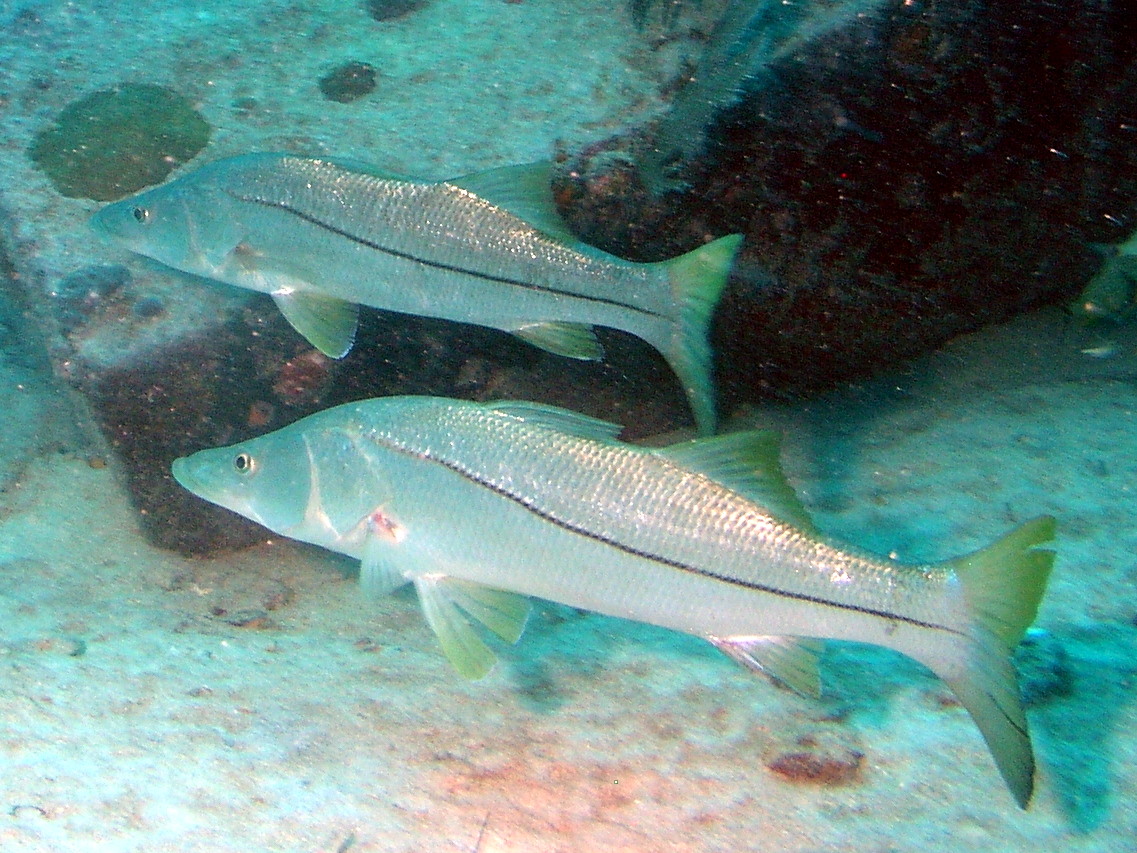
Common Snook
No. 25A hard-fighting inshore gamefish of warm coasts. A fluorocarbon leader is needed because snook have abrasive mouths and gill covers.

Bluefish
No. 26Called tailor in Australia. Very sharp teeth mean a short wire or heavy leader is standard.

Atlantic Mackerel
No. 27The classic first sea fish from UK piers and rocks. Feathers or small spinners catch them when shoals arrive.

European Chub
No. 28A wary river fish that eats almost anything. Stealth matters more than exotic tackle.
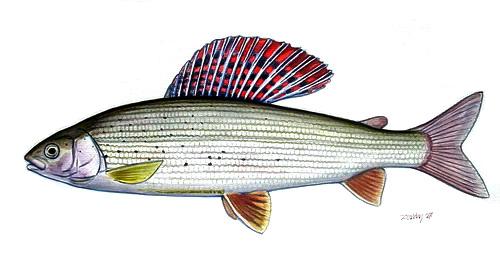
Grayling
No. 29A delicate river fish with a sail-like dorsal fin, a sign of clean water. Fine tackle and small flies suit it.
Photos from Wikimedia Commons under free licences — credits on each species page.