
Head-to-head
European Sea Bass vs Common Snook
How the tackle for european sea bass and common snook compares, and whether one setup can reasonably cover both.

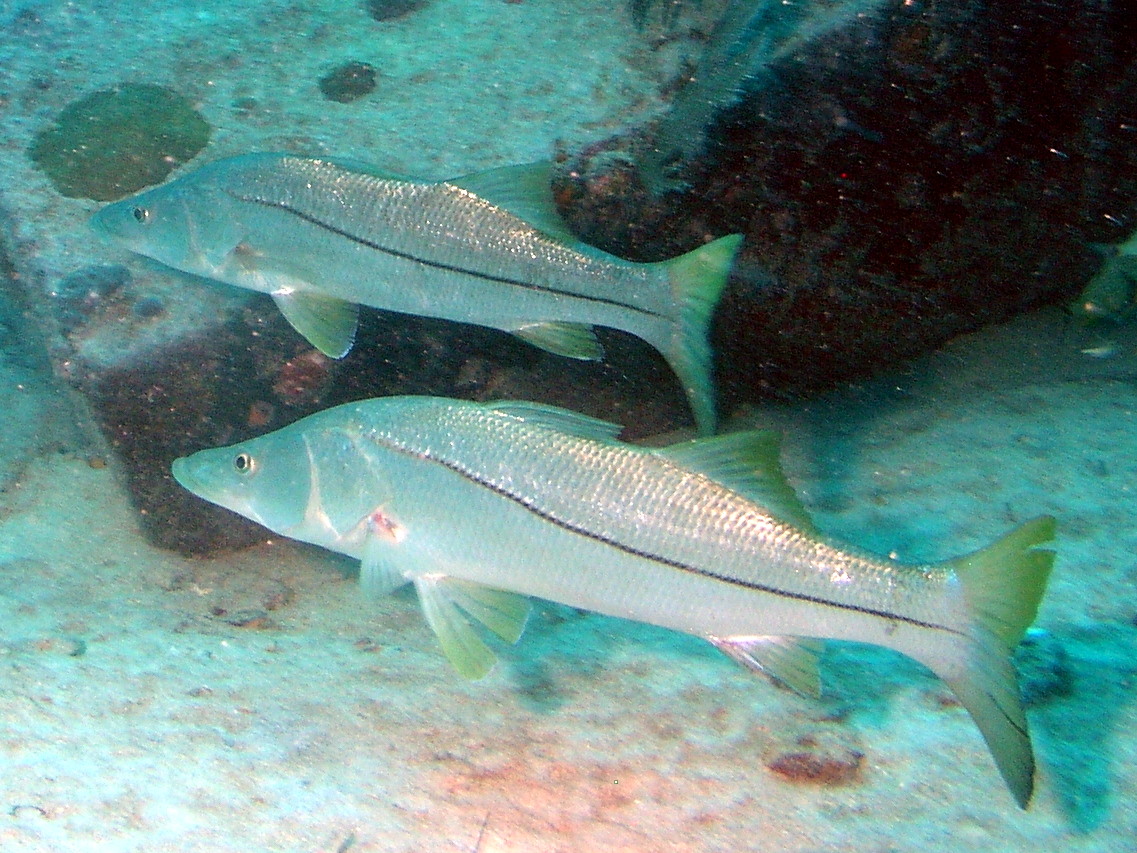
Photos: Wikimedia Commons (free licences) — credits on each species page.
Last reviewed 26 September 2026 · Editorial policy
Side by side
Tackle comparison
| European Sea Bass | Common Snook | |
|---|---|---|
| Water | Saltwater | Saltwater |
| Regions | UK, EU | US |
| Typical weight | 1–6 lb | 3–15 lb |
| Main line | 15–30 lb | 15–30 lb |
| Rod | Medium, fast action (lure-rated roughly 10–40 g), 8–10 ft | Medium to Medium-Heavy, fast action, 7–7.5 ft |
| Reel | 3000–4000 saltwater spinning | 3000–4000 spinning |
| Hooks | Size 2–3/0 singles; lure trebles as supplied | 1/0–4/0; circle hooks for live bait |
| Best conditions | Rough or coloured water after a blow, dawn and dusk, and the flooding tide. | Moving tides, low light and night around lighted docks and bridges. |
Verdict
Can one setup do both?
Line ranges overlap
Both species are commonly fished with 15–30 lb line, so a rod and reel matched to that range can cover both in typical conditions. Heavy cover or larger-than-average fish still push you toward the heavier end.
Shared methods
Techniques that work for both
Spinning with Lures
Casting and retrieving spinners, spoons or small soft plastics on light spinning tackle.
Topwater
Surface lures — poppers, walkers and frogs — worked across the top for visual strikes.
Jerkbait / Glidebait
A suspending or slow-sinking minnow worked with sharp rod jerks and long pauses.
Related